 うたぴょんスポーツ
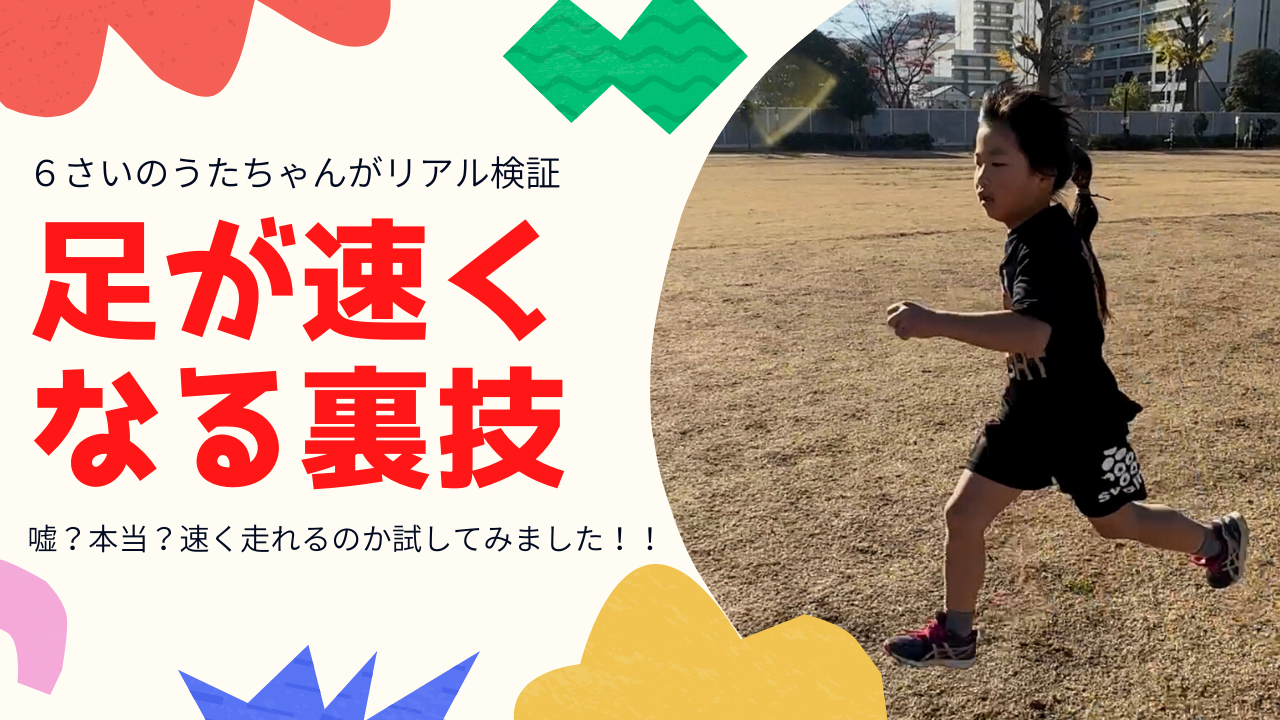
Can rubber bands or bubble wrap make a child run faster? We tried both with Uta when she was six, then compared the times with an ordinary run. Running without either hack was fastest in our comparison: 20.52 seconds. Using both together took 20.55 seconds.
This is a family experiment from Japan, not a controlled study. Below are the actual times shown in our video, what we tried, and why the discomfort mattered to us as much as the stopwatch.
Sponsored
Our results: four running conditions
| Condition | Time | Difference |
|---|---|---|
| No hack | 20.52 sec | Baseline |
| Rubber bands + bubble wrap | 20.55 sec | +0.03 sec |
| Bubble wrap | 21.05 sec | +0.53 sec |
| Rubber bands | 22.41 sec | +1.89 sec |
What we compared, and what we cannot conclude
Uta ran a section of a park up to the cones shown in the video. I cannot verify the distance in metres, so these are not 50m or 100m results. The trial order was no hack, bubble wrap, rubber bands, then both together.
The table contains the displayed results, not averages from repeated trials. Timing variation, running order and tiredness were not controlled. A difference of just 0.03 seconds between the two quickest runs cannot establish a general effect.
What we can say is narrower: none of the three variations produced a faster displayed time than the ordinary run in this comparison. Uta also said that running normally felt easier.
Bubble wrap inside the shoes
We cut packaging bubble wrap to fit under the heel inside each shoe. We wanted to see whether the extra material changed how running felt. The materials came from a Japanese 100-yen shop, but being cheap and easy to try says nothing about whether an idea works.
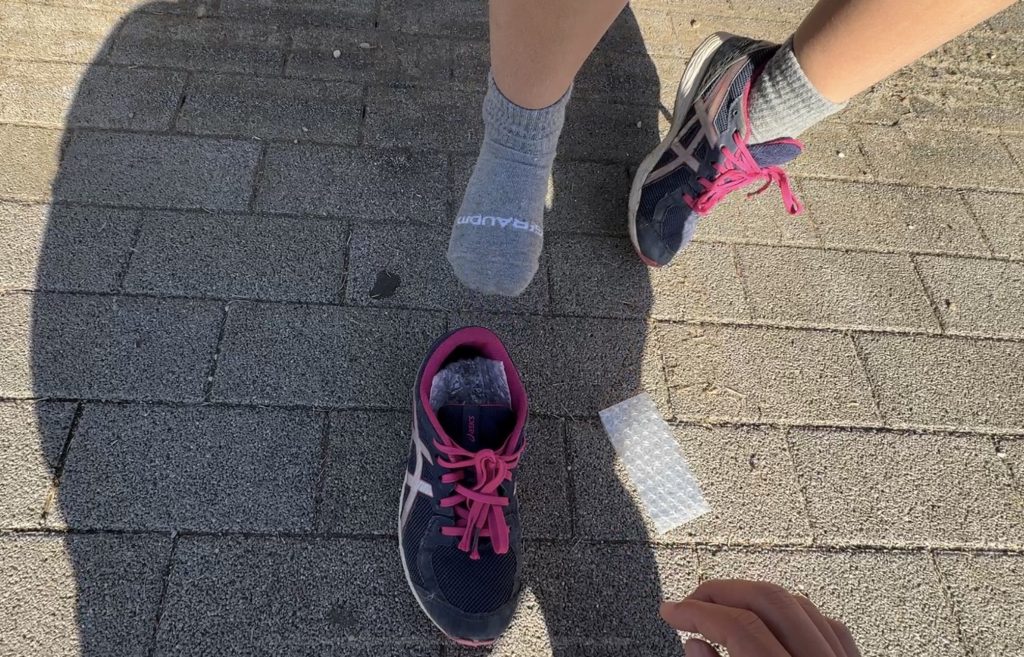
The bubble wrap tended to shift inside the shoe. The displayed time was 21.05 seconds, 0.53 seconds slower than running without it.
Rubber bands: discomfort, not a useful shortcut for us
The version we tested used a rubber band between the ankle and big toe. Uta felt pain from the pulling. Her displayed time was 22.41 seconds, the slowest of the four conditions.
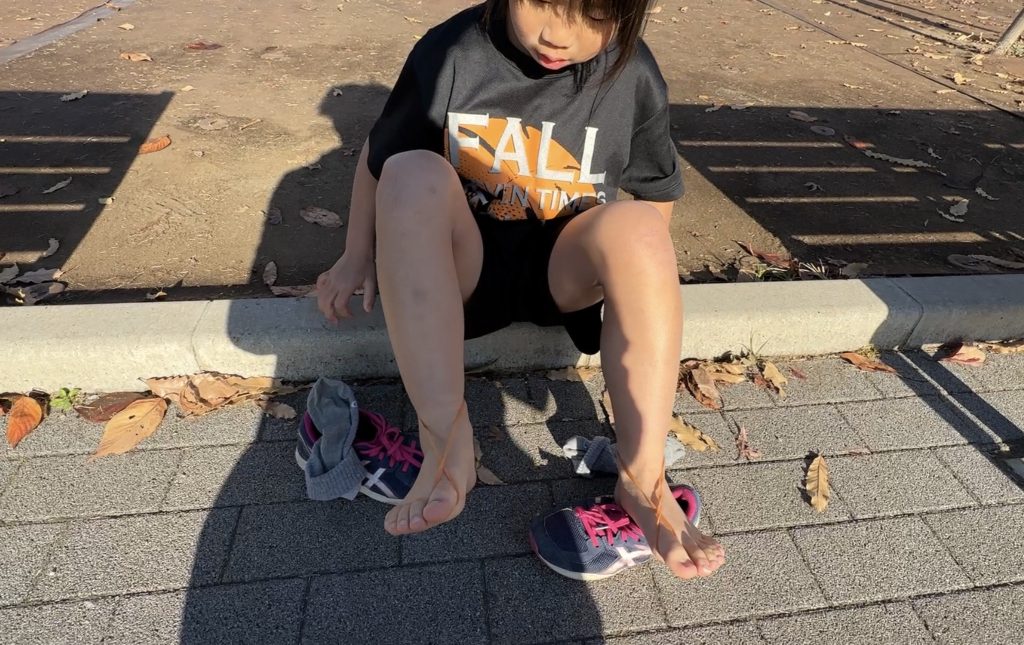
Combining the rubber bands with bubble wrap brought the time to 20.55 seconds, but the pain was still there. We removed the bands straight after the run and could see marks despite the short time they had been on.
As her dad, I did not think asking her to put up with pain for a running trick was worthwhile. This is a record of what we tested, not a recommendation to copy the setup.
Watch the original comparison
The video is in Japanese; the results and observations are explained in English above. The results presentation starts at 7:05, with all four conditions together at about 7:45.
What we practised instead
Uta mainly runs longer distances, but we also include athletics drills and movement practice. Her later 100m records in the original article were 18.67 seconds in Grade 2 and 17.01 seconds by September of Grade 3. Those are separate performances, not measurements of the hacks' effects.
One movement we used was stepping up and down the bottom stair, left foot then right, counting cycles over 20 seconds. We also practised responding to the starting signal rather than waiting for everyone else to move. These were parts of our routine; we did not test whether either produces a particular improvement in a week.
The lesson from our comparison was simple for our family: ordinary running was both quickest on the displayed results and more comfortable for Uta. That was more useful to us than a promise of an instant shortcut.
This English edition draws on our Japanese account, first published in December 2022. The video results were checked again in October 2026.