 うたぴょんスポーツ
An ekiden is a distance relay in which teammates pass a cloth sash, called a tasuki, from one runner to the next. For children, the appeal is easy to see: your own run becomes part of a team effort. My daughter Uta has experienced that in Japanese elementary-school races, as well as competing individually on the track and on the road.
I run Utapyon Sports as her dad, recording her races and our family trips. This guide uses three events she actually entered: the Osaka Elementary School Ekiden, a 1000m track race in Adachi, Tokyo, and the children's 3km at the Tsurugajo Half Marathon in Fukushima. The videos below show Uta's races; the explanations are for readers meeting Japanese children's running for the first time.
Sponsored
What is an ekiden, and how does the relay work?
The route is divided into sections, or legs. Each teammate runs their assigned leg, then hands the tasuki to the next runner. The last runner is the anchor. Unlike a short track relay using a baton, the sash is the distinctive object connecting an ekiden team.
That basic idea is also explained in the UK Ekiden guide for schools. The number of runners, distances and divisions depend on the particular event. Uta's four-runner Osaka team is one example, not a format shared by every children's ekiden.
Two results matter when reading a relay report: a runner's time for their own leg, and the team's overall result. Winning as a team does not, by itself, mean that every member was the fastest runner on their leg.
Osaka: four teammates and Uta on the anchor leg
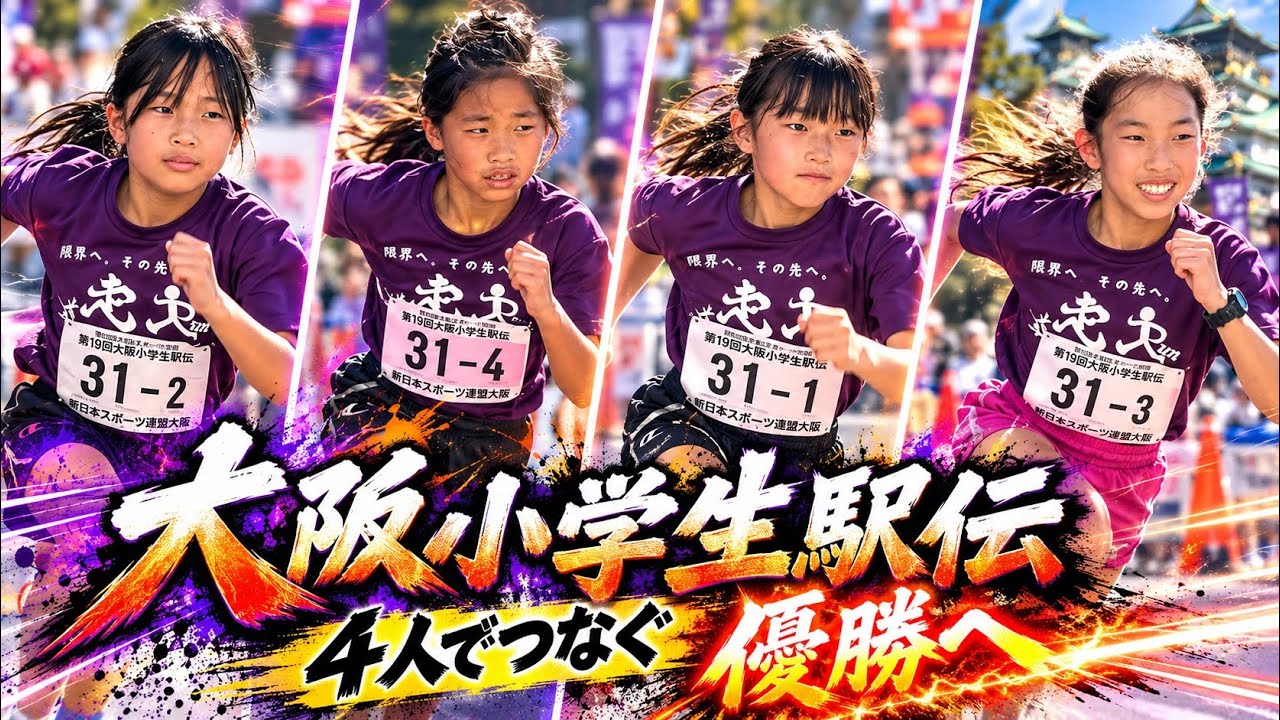
On 18 October 2026, Uta raced in the Osaka Elementary School Ekiden with a team called Bakuten Shimai — “Backflip Sisters”. She was in Japanese Grade 5 and was 10 years old. The four-runner team included a friend and rival from Ehime, a teammate with a national runner-up result in boxing, the eldest member known for her backflip, and Uta.
Here, “sisters” is the team's nickname. The interesting part of our trip was seeing these different teammates come together. Our longer Osaka video follows the journey by shinkansen, Japan's bullet train, including study time on the way, before turning to the race.
Uta ran the final leg. Our race log records her distance as 1.4km and her time as 5:08. The team won the elementary-school girls' division, with a recorded team total of 20:07. Her 5:08 is her individual leg time; it is not the time for all four runners together.
Watch for the handover: Uta's run starts with receiving what the previous three teammates have carried. Then, as anchor, she takes the team's sash through the final leg. This is the clearest difference from the individual races later in this guide.
For the journey and all four teammates, watch our Osaka trip and team video. The original Japanese race report and our race record list provide the supporting record.
Adachi: an individual 1000m track race
On 23 March 2024, Uta entered the Adachi long-distance championships in Tokyo. This was the girls' Grades 1–2 1000m, near the end of her Grade 2 year. She was eight.
There was no sash and no next teammate. Each runner had her own start-to-finish result. Our original account describes a cold day with rain turning to sleet. After getting caught behind other runners early on, Uta moved past them and went on to win her division in 3:50.33, a personal best at the time.
The notation means 3 minutes, 50.33 seconds for the whole 1000m. It is one child's result at one meet, not an average for Japanese eight-year-olds. Our log marks this as an officially recognised track result; the Osaka road-relay leg should not be treated as the same kind of performance comparison.
Watch for the individual race: everyone is competing over the same 1000m, and the finish is each athlete's own. You can follow Uta's early position and how the field spreads out as the race develops.
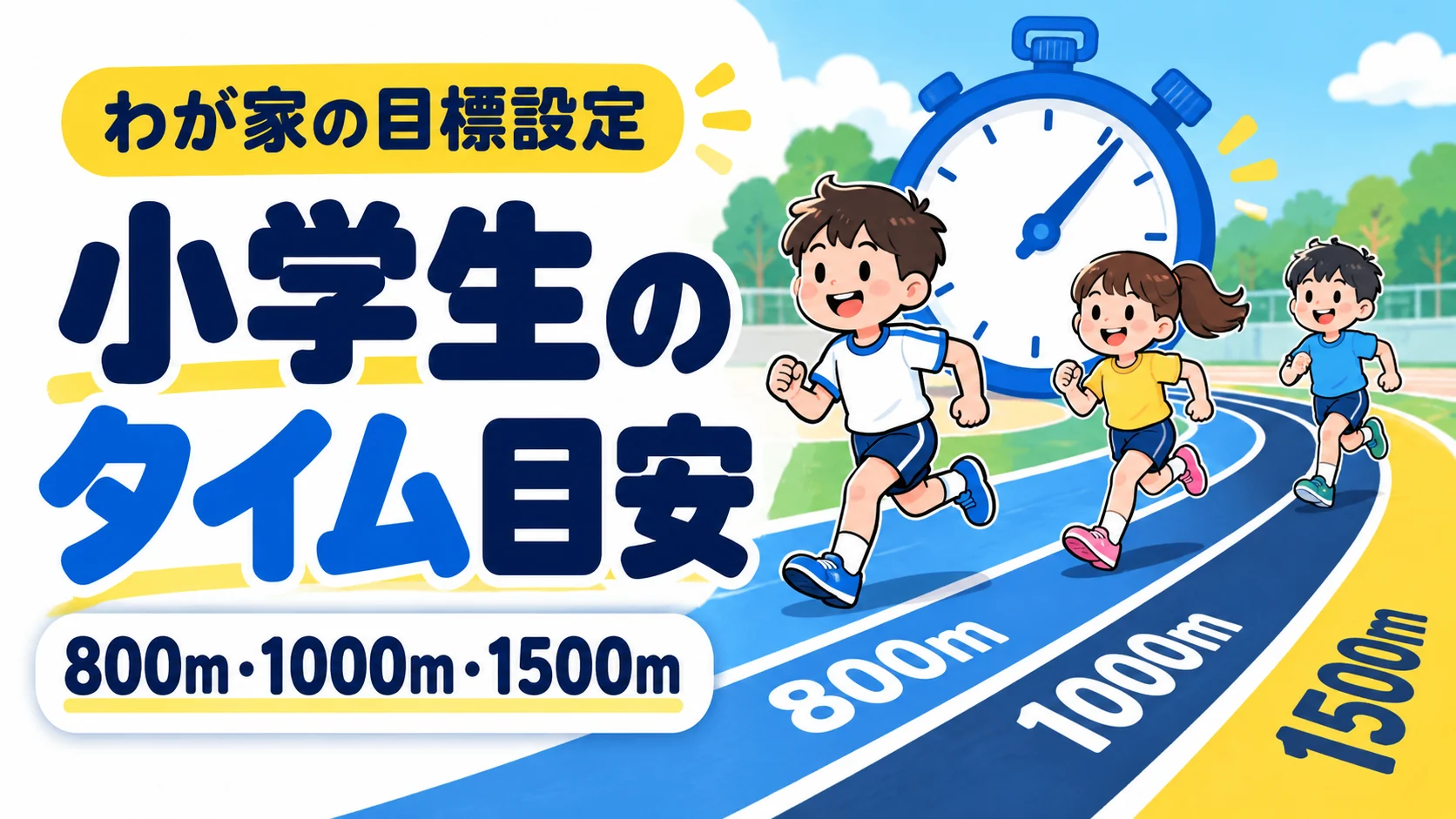
The original Adachi report in Japanese includes the weather, preparation and result. If you are looking for a starting point for interpreting times, our 800m, 1000m and 1500m goal-time article explains the difference between a family's targets and actual race results.
Tsurugajo: a 3km children's race at a half-marathon event
The event name can be confusing in English. At the Tsurugajo Half Marathon in Aizuwakamatsu, Fukushima, on 4 October 2026, Uta ran the Grade 5 girls' 3km. She did not run the 21.0975km half marathon.
The official 2026 event brochure lists several distances and separate divisions, including this children's race. Always read the distance and division alongside an event's headline name.
This was Uta's third appearance at the event. Our log records 2km races in 2024 and 2025, followed by 3km in 2026 as she moved into the Grade 5 division. “Third appearance” therefore does not mean three runs over the same distance.
In 2026 she finished in 12:08, with fifth place recorded in our race log. The video description explains that she had not been running as well as she hoped recently. This is part of our record of that day, rather than a promise that returning to an event always brings a faster time.
Watch for the race distance and division: this is an individual children's road race within a larger event, rather than an ekiden or the adult half marathon.
See our Japanese report of this visit for the original account.
Three formats, compared through Uta's races
| Format | Uta's example | How to read the result |
|---|---|---|
| Ekiden relay | Osaka: 1.4km anchor leg | 5:08 for Uta's leg; girls' team win |
| Individual track race | Adachi: 1000m, Grades 1–2 girls | 3:50.33; division win |
| Individual road race | Tsurugajo: 3km, Grade 5 girls | 12:08; fifth place |
Useful words when watching a Japanese race video
- Tasuki: the sash passed between ekiden teammates.
- Kukan: a section or leg of the relay. A leg time belongs to one runner's section.
- Anchor: the final runner on the team.
- Shogakusei: an elementary-school pupil. Japanese primary school has Grades 1–6; a school grade and a race's age group are not interchangeable labels.
- Jiko best, or PB: a personal best. It is different from winning a division or setting an event record.
The examples here show why the category matters: Adachi grouped Grades 1 and 2 together, while Tsurugajo had a Grade 5 girls' race. A result needs its distance, date and division to make sense.
Can a visiting family enter the same races?
Check each organiser's current entry rules before making plans. These videos document our participation and do not establish that a visiting child is eligible. For example, the 2026 Tsurugajo brochure limited entries to people resident in Japan. Team composition, school-grade categories and entry deadlines also need checking for the event and year you are considering.
Follow Uta's running in Japan
An ekiden lets us follow how several children contribute to one team result. A track or road race records a different kind of challenge for the individual runner. Keeping those distinctions in mind makes the videos much easier to follow, even without understanding every word of the Japanese commentary.
You can explore Uta's profile and race records, read about our parent-and-child jogging outings, or compare the goals in our 800m, 1000m and 1500m article. These are records of one family's experience of running in Japan.
Beyond race days, read about climbing Mount Fuji with eight-year-old Uta on the Fujinomiya Trail, including our 2024 family video and explanations for first-time readers.